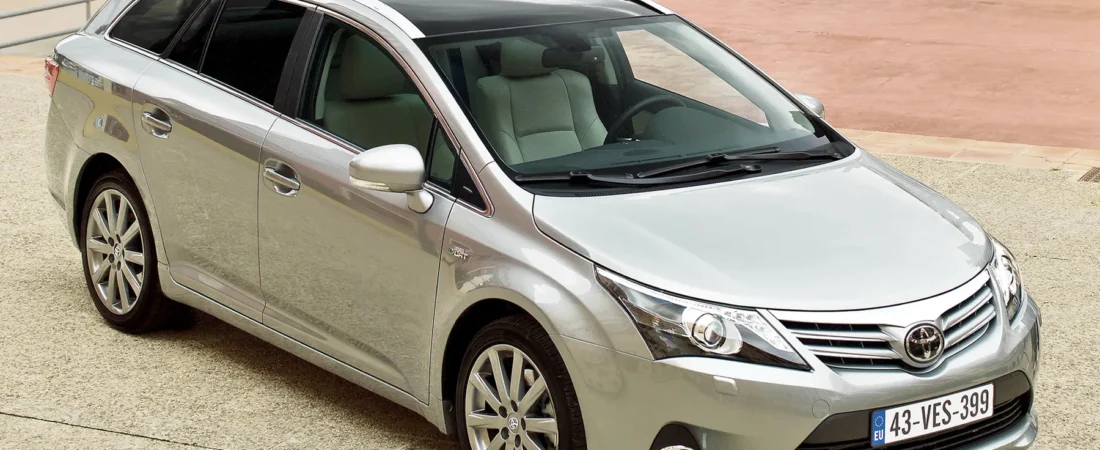
The 2012 Toyota Avensis, benefiting from a facelift introduced in late 2011, is a vehicle that embodies Toyota’s core philosophy: robust, sensible, and utterly dependable transport. Positioned as a rival to the Ford Mondeo and Volkswagen Passat, the Avensis eschews driving excitement in favor of unwavering reliability and comfortable motorway cruising.
Summary: The White Goods of Motoring
The Avensis is often described as the automotive equivalent of a reliable household appliance—it’s not flashy, but it will start every time and handle the daily grind without fuss. This model is primarily aimed at business fleets and family buyers who value low running costs and peace of mind above all else.
Key Strengths
1. Unquestionable Reliability This is the Avensis’s defining feature. Owner reviews consistently praise its mechanical fortitude, with many reporting trouble-free motoring for years and well over 100,000 miles. It is highly rated in older vehicle reliability surveys, often ranking near the top of its class. For a used car buyer, this translates directly to lower stress and reduced repair bills.
2. Practicality and Space Available in both Saloon and Tourer (Estate) body styles, the Avensis offers generous interior space.
- Boot: The Tourer estate is highly practical, offering a large, usable load bay (over 500 liters with seats up, expanding significantly when folded). The Saloon also provides a respectable 509 liters of luggage space.
- Cabin: The car comfortably seats four adults with plenty of head- and legroom. The 2012 facelift introduced a revised center console and higher quality materials, especially on top-spec models like the Luna or Excel (depending on the market).
3. Efficiency and Running Costs The diesel options, particularly the popular 2.0-litre D-4D, are strong performers in terms of fuel economy and emissions.
- Fuel Economy: The 2.0 D-4D engine is quoted with combined figures often over 60 MPG (UK), though real-world figures tend to be closer to 45-50 MPG, which is still respectable for a car of this size.
- Tax: The efficient engines often fall into low-emission bands, keeping road tax costs minimal.
- Service Intervals: Annual or 10,000-mile service intervals help keep maintenance costs reasonable.
The Trade-Offs: Where it Lags
1. Driving Dynamics If you seek an engaging driving experience, the Avensis is not the car for you. Its focus on comfort results in soft suspension and notable body roll through corners. The steering is often described as feeling “dead” or lacking feedback compared to rivals like the Ford Mondeo. It is stable and comfortable on the motorway, but unremarkable elsewhere.
2. Ride Quality Despite the soft suspension, many owners note a persistent “jiggliness,” especially on uneven city streets, meaning the ride quality can be poorer than expected over certain road surfaces.
3. Dated Interior (Even After Facelift) While the 2012 refresh improved materials and added the Toyota Touch infotainment system, the overall design and some features can feel dated compared to European rivals. Ergonomic issues like the absence of squab tilt adjustment for the driver’s seat or poor placement of minor controls have been noted by owners.
Common Problems and Buyer Checks
While the Avensis is exceptionally reliable, a few common issues exist, primarily concerning the diesel models and certain mechanical components:
| Component | Potential Issue | What to Check/Listen For |
|---|---|---|
| Clutch | Known to wear out prematurely, especially on high-mileage models. The clutch master cylinder can also be a fault point. | Listen for a whining or grinding noise when pressing/releasing the clutch, or difficulty shifting gears. |
| Diesel Particulate Filter (DPF) | Common problem on diesel models, especially those used for short, stop-start city journeys. | A blocked filter can cause reduced performance, warning lights, or even a smell of fuel in the cabin. Ensure the car has been regularly driven on the open road. |
| Steering Rack | Reports of knocking or rattling from the steering, sometimes linked to corrosion or component wear. | Check for any unusual noises or excessive play when turning the steering wheel at low speed. |
| Diesel Engines (2.0 & 2.2 D-4D) | Some older units (pre-2009) had issues with oil consumption and head gasket failure, though the 2012 facelift models are generally considered safer. Injector issues are still possible on older, high-mileage diesel cars. | Check service history for engine replacement or head gasket repair, and listen for timing chain noise on cold starts. |
| Automatic Handbrake | Failure of the electronic automatic handbrake can lead to costly repairs. | Ensure the electronic parking brake engages and disengages smoothly without excessive force or warning lights. |
Engine Options (Common)
| Engine | Type | Power (approx.) | Combined MPG (Official) | Notes |
|---|---|---|---|---|
| 1.8 Valvematic | Petrol (Manual/CVT Auto) | 145 hp | $\sim 43.5$ MPG | Smoother, safer choice for reliability; lacks midrange grunt. |
| 2.0 D-4D | Diesel (Manual) | 124 hp | $\sim 62.8$ MPG | The best blend of efficiency and torque for motorway driving. |
| 2.2 D-CAT | Diesel (Manual/Auto) | 148-175 hp | $\sim 52.3$ MPG | Strongest performance, but historically had more common issues (check history carefully). |
Final Verdict
The 2012 Toyota Avensis is the quintessential choice for the buyer who wants a dependable, spacious, and economical vehicle and couldn’t care less about the thrill of driving. It is a solid, safe, and logical purchase that excels at its primary mission: getting you from A to B with minimal drama and maximum comfort. If you can live with its conservative nature and slightly dull handling, you’ll be rewarded with a car that will likely outlast its competitors.